Executive Summary
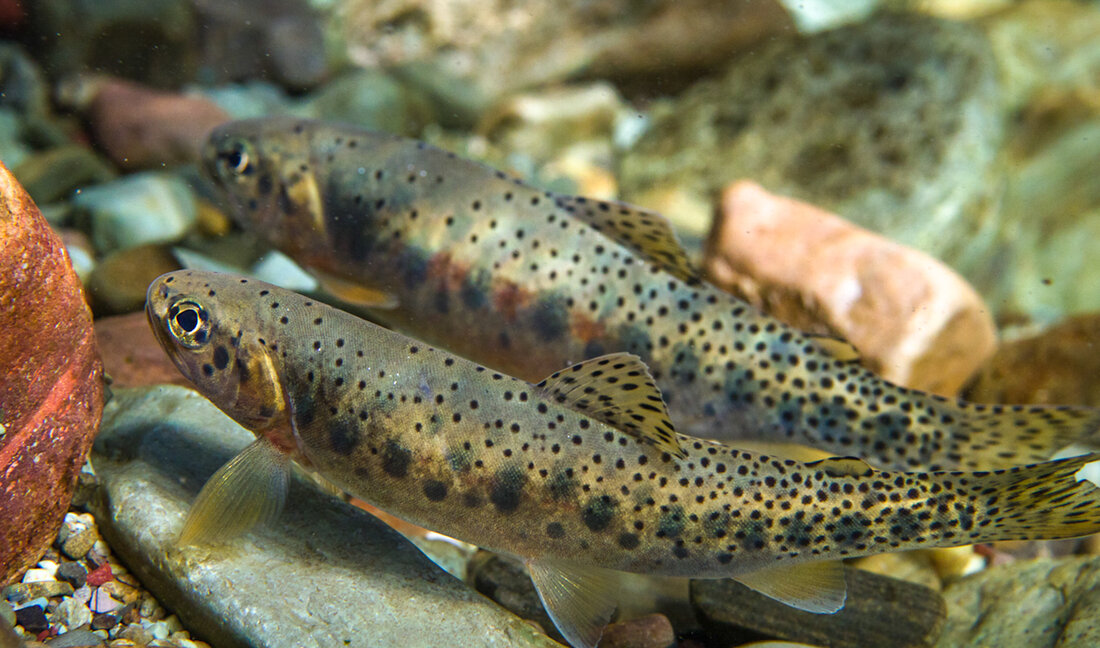
The purpose of the Elk River Watershed (Qukin ?amak?is) Connectivity Restoration Plan (WCRP) is to improve understanding of habitat connectivity for Westslope Cutthroat Trout (Oncorhynchus clarkii lewisi) in the Elk River watershed (Qukin ?amak?is) and inform efforts to close knowledge gaps and plan and prioritize restoration. The Elk River watershed is the traditional unceded territory of the Yaq̓it ʔa·knuqⱡi’it First Nation and Ktunaxa Peoples, who have been stewards of the land since time immemorial. The Elk River watershed is known to them as Qukin ?amak?is (Raven’s Land), and we refer to the Elk River watershed as Qukin ?amak?is throughout this document.
Local data and knowledge are combined with connectivity modelling to estimate current connectivity status and identify structures that potentially block the most habitat. This informs the prioritization of field assessments to close the most significant knowledge gaps efficiently. Information from field assessments of barrier status and habitat condition are incorporated into the model, improving understanding of which barriers block the most habitat, and informing restoration prioritization. As knowledge gaps are closed and barriers are addressed, this plan will be revised to summarize progress and provide updated estimates of connectivity status and the status and relative importance of remaining structures.
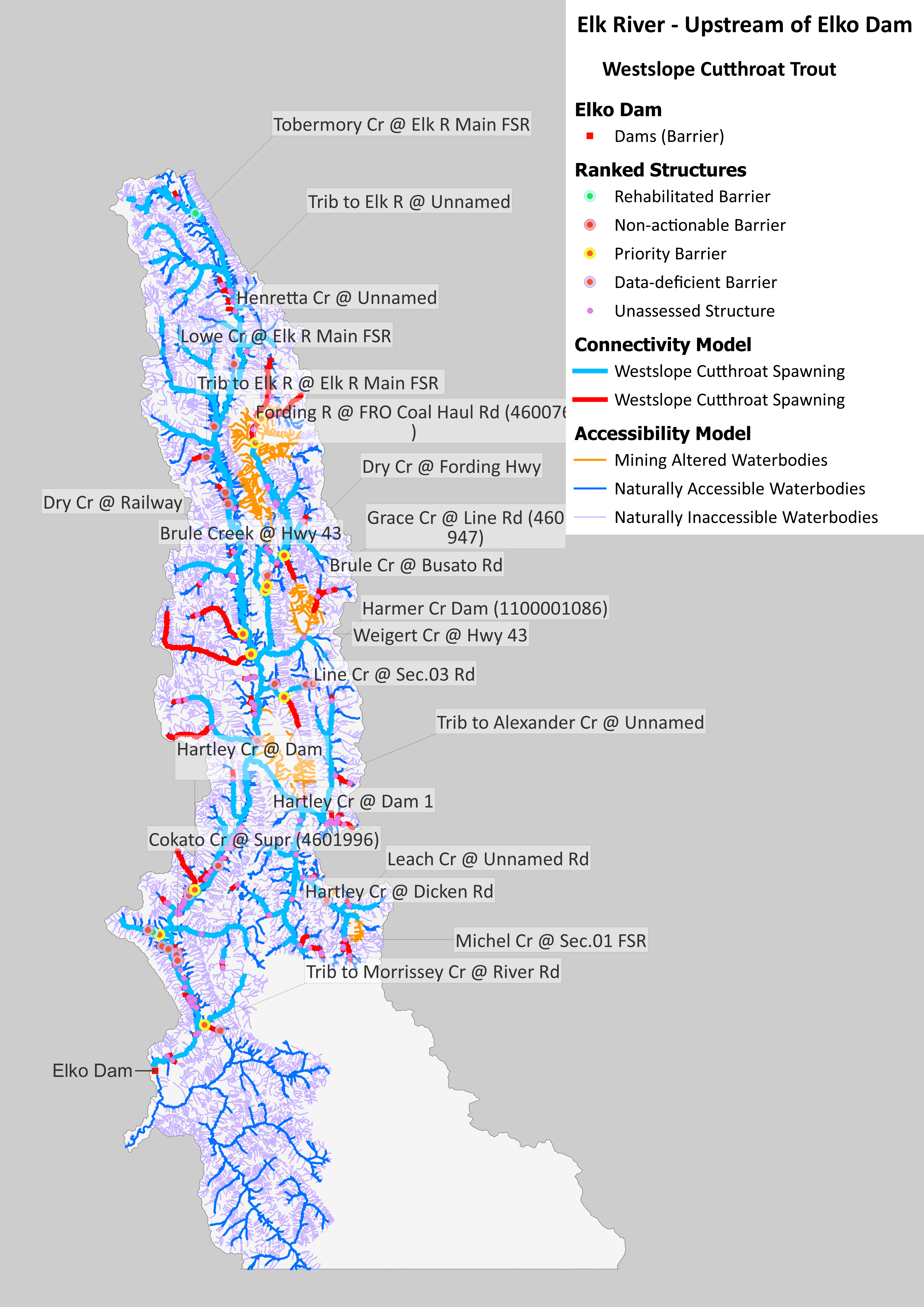
In Qukin ?amak?is upstream of Elko Dam, 756.67 km of Westslope Cutthroat Trout habitat are currently connected, 192.15 km are disconnected, and 27.21 km are permanently altered by mining. This means that 77.53% of the 976.03 km of total habitat is connected, and 2.79% of total habitat is permanently altered by mining.
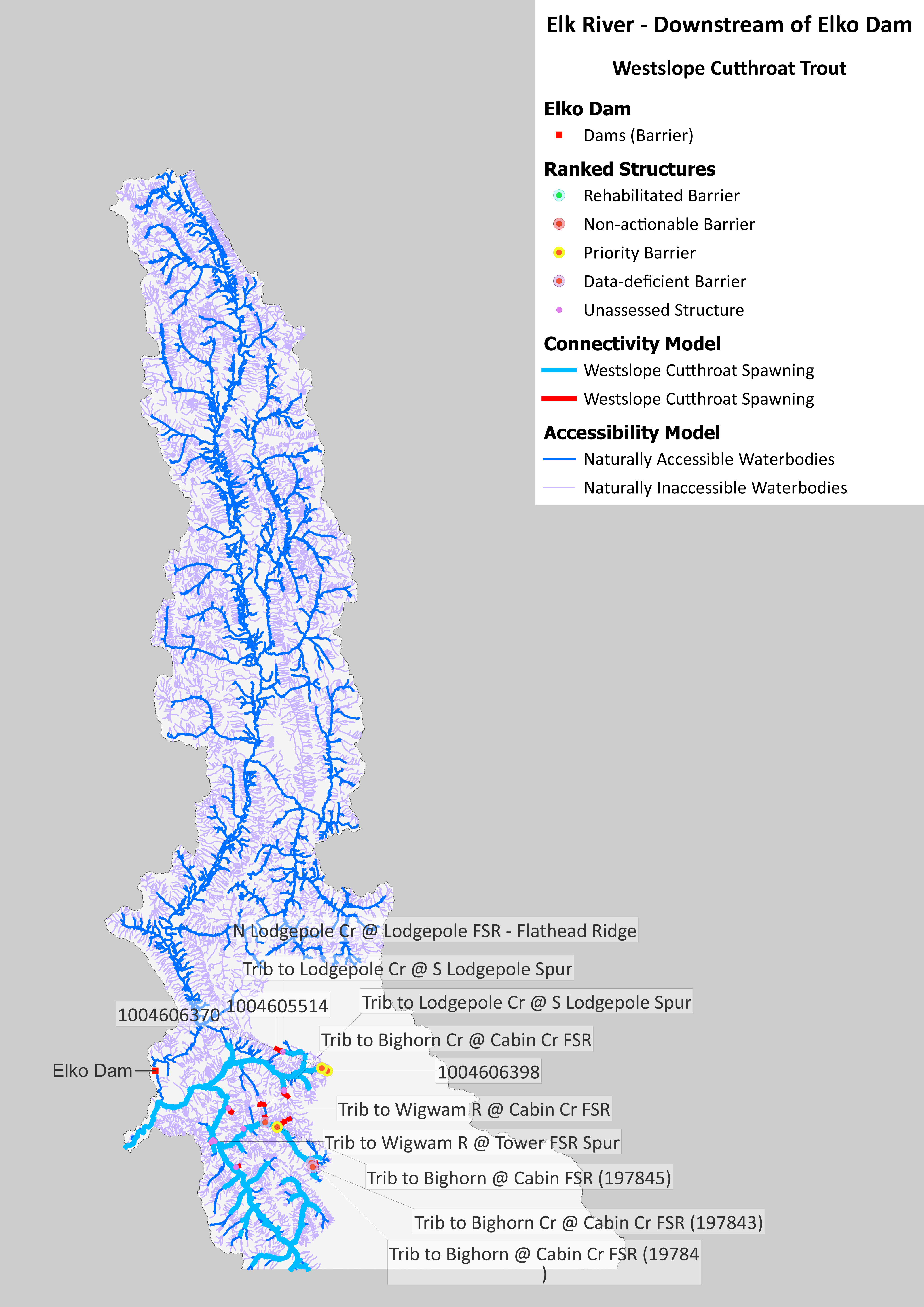
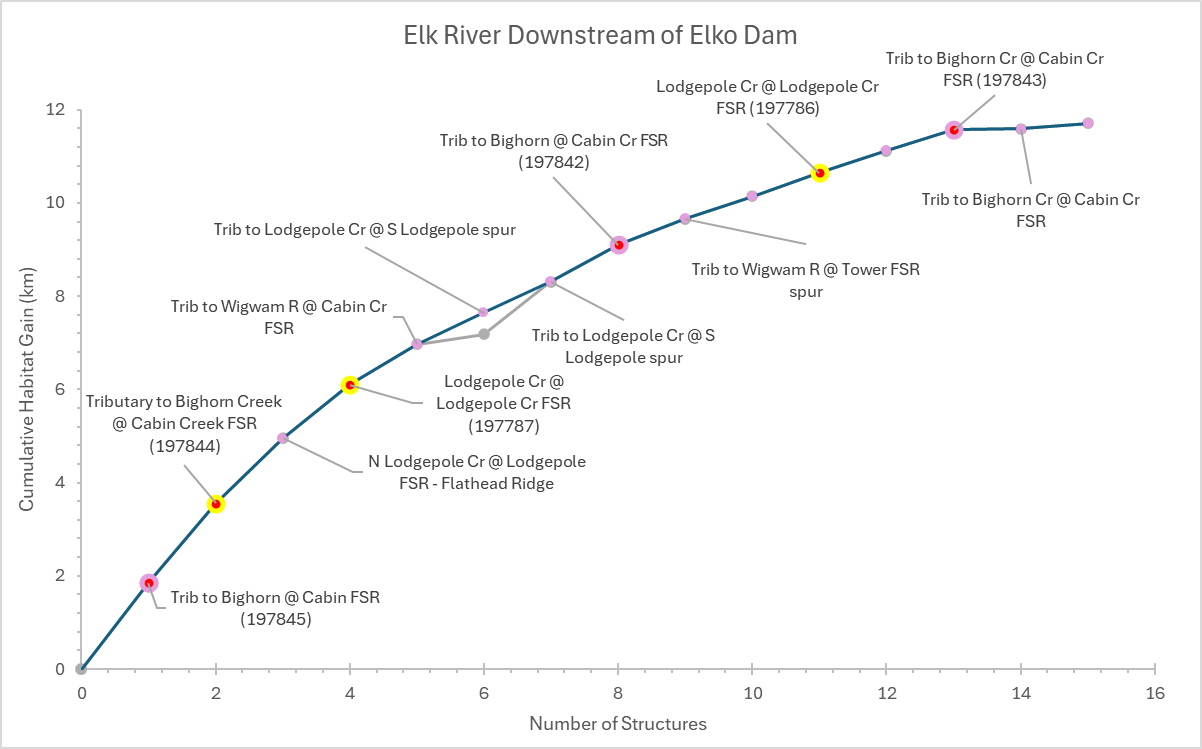
In Qukin ?amak?is downstream of Elko Dam, 208.36 km of Westslope Cutthroat Trout habitat are currently connected and 11.72 km are disconnected. This means that 94.67% of the 220.08 km of total habitat is connected.
In Qukin ?amak?is upstream of Elko Dam, 216 structures potentially disconnect Westslope Cutthroat Trout habitat. Of these, 15 are identified as barriers in need of rehabilitation (priority barriers), 1 are identified as barriers that do not warrant rehabilitation (non-actionable), and 211 require further field assessment.
In Qukin ?amak?is downstream of Elko Dam, 15 structures potentially disconnect Westslope Cutthroat Trout habitat. Of these, 3 are identified as barriers in need of rehabilitation (priority barriers), 1 are identified as barriers that do not warrant rehabilitation (non-actionable), and 14 require further field assessment.
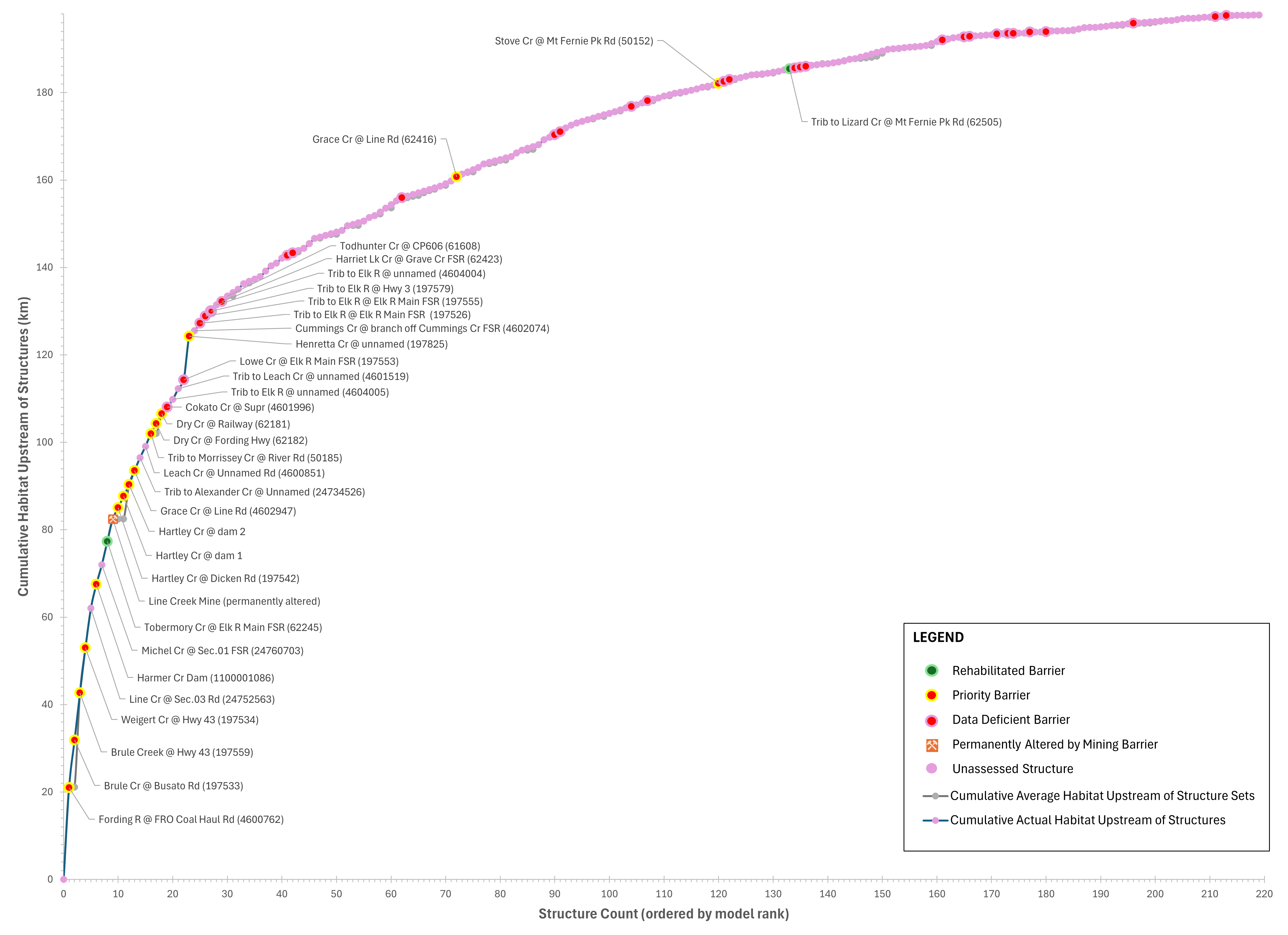
This WCRP process was initiated in 2020 with a series of workshops completed with local partners and rightsholders, and the first WCRP was published in 2022. Since inception, the passability of 167 structures has been assessed, and further habitat confirmations were completed at 9 of these. In-depth habitat investigations were also completed for barriers in Brule, Weigert, Lodgepole and Bean creeks, and in select tributaries to Bighorn and Morrissey creeks. Fish passage has been rehabilitated at 2 barriers (unnamed tributary to Lizard Creek at Mount Fernie Park Road and Tobermory Creek at Elk River Main FSR), resulting in improved or restored access to 5.58 km of habitat. Designs for rehabilitating a barrier on Stove Creek in the Lizard Creek drainage have also been completed.